

 Agricultural Autonomy Institute joins Harper Adams University's 125th anniversary celebrations
A leading American expert in agricultural autonomy has paid tribute to Harper Adams University as it marks its 125th anniversary.Dr Alex Tho …
Posted 22 October
Katie Morgans discusses what’s in the River Dore and her placement year with The Countryside Restoration Trust.
7 December 2021
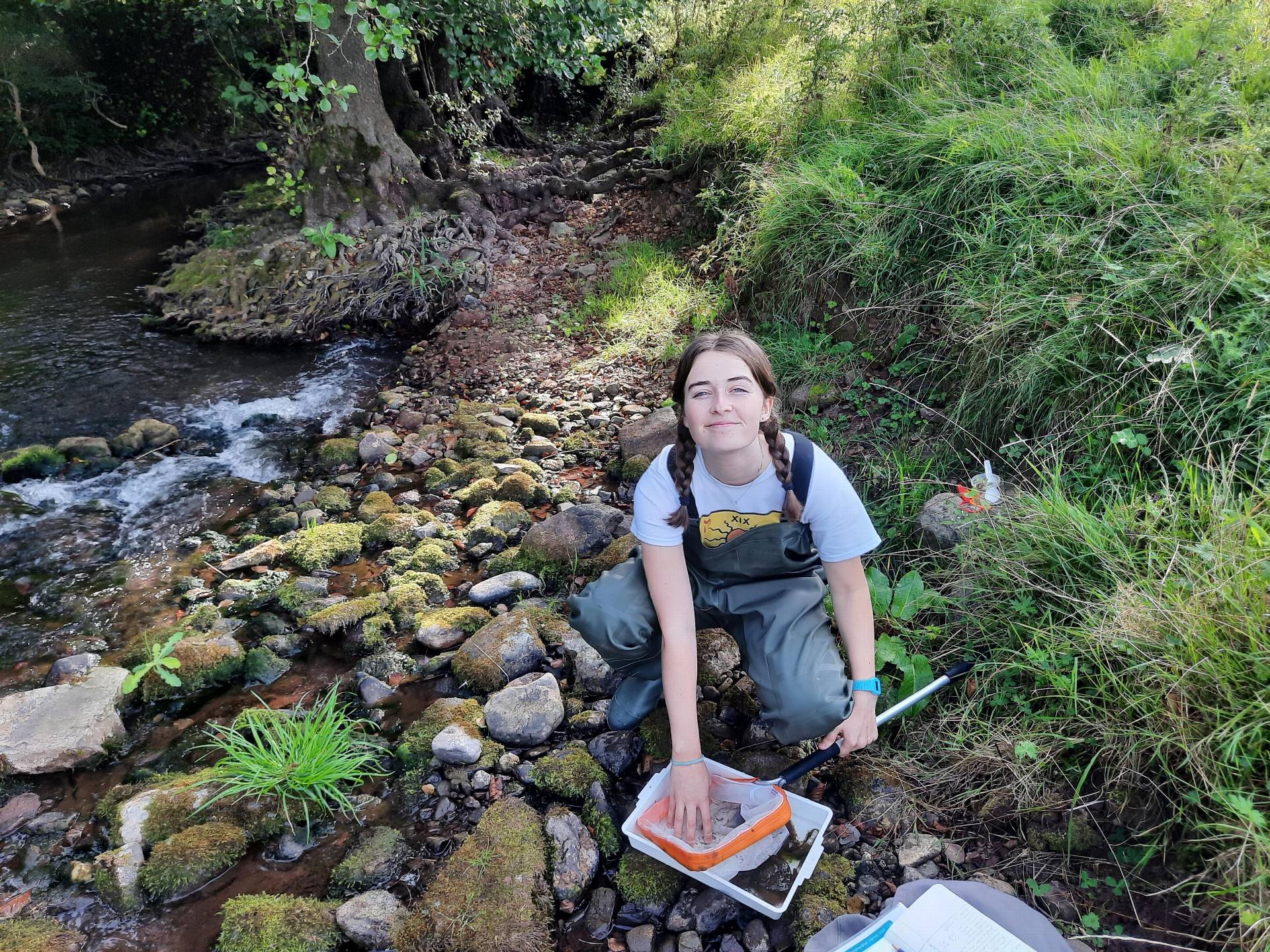
Third-year BSc (Hons) Applied Zoology student, Katie Morgans is currently on her placement year with The Countryside Restoration Trust, but has found time to write a blog about her placement experiences so far.
As well as explaining why rivers like the River Dore are so important to our wildlife, Kate also demonstrates how the practical nature of our courses really aid our students in their year in industry.
“Freshwater rivers are excellent and diverse habitats. They support a wide range of organisms including mammals, birds, amphibians, and invertebrates. They can be used as a food source, breeding ground, and as shelter from predators.
It’s important that our rivers are in good health so that they can continue to support this range of life. However, our rivers face a serious threat from the increasing levels of pollution contamination occurring all over the country.
Increasing occurrences of sewage leaching and inappropriate disposal of agricultural waste have led to high levels of phosphate and other contaminants in our waterways.
One way to check the health of these freshwater rivers is to do an invertebrate survey, recording the organisms present and their quantity. The species act like bioindicators, showing the state of the river, with species having high or low pollution tolerances.
Each species group has its own score linking with this level of tolerance. For example, worms have a high tolerance to pollution and a low score. The biotic index of the river can then be calculated from the scores, with 0 suggesting no life at all was present, and 10 indicating many pollution intolerant organisms and a very clean river.
We recently completed a freshwater invertebrate survey in the River Dore as part of my placement with the Countryside Restoration Trust. The river runs along the boundary of Turnastone Court Farm in Herefordshire. We used kick sampling to collect the samples; a method that involves disturbing the riverbed with your feet and catching all the debris in an awaiting net.
Four samples were taken from individual points on the river, with over 228 individual organisms collected from nine different species group. Some of the invertebrates found include freshwater shrimp, water beetles, and swimming mayfly nymphs.
The biotic score for each of the four samples collected, with the average score for the river in total coming to 4.54. This score suggests that the river is of average water quality, with some pollution present in the river.
Our rivers must be free of pollution if they are to continue supporting the variety of life that depends on them for survival. Human activity is the biggest contributor to the rising pollution levels, with diffuse pollution from agricultural sources like pesticides and animal waste accumulating over time and leading to the nutrient enrichment of rivers.
This process has a great negative effect on our water systems. The excessive levels of phosphorus and nitrogen cause extreme plant and algal growth, decreasing levels of dissolved oxygen and causing hypoxia in fish. These algal blooms can also increase numbers of nuisance species and the spread of diseases.
Increasing levels of pollution from human activity are threatening our river habitats and the aquatic life they support. It is important that pressure is put on the government to take action and better regulate sewage leaching and the management of agricultural waste. Improvement in these areas will cause a dramatic change in the health of our rivers and could open the door for clean habitats with more species diversity.”
Blog written by Katie Morgans, a third-year BSc (Hons) Applied Zoology student.
Read the extended version of this blog at The Countryside Restoration Trust’s Website.

Related Posts
Agricultural Autonomy Institute joins Harper Adams University's 125th anniversary celebrations
A leading American expert in agricultural autonomy has paid tribute to Harper Adams University as it marks its 125th anniversary.Dr Alex Tho …
Posted 22 October
 Sky's the limit: Helen joins MP's fundraising parachute jump
A charity skydive by a Harper Adams University Business Development Consultant has helped raise more than £16,000 for a new cancer cen …
Posted 21 October
 From dairy farm - to farm vet
Growing up on a dairy farm played a huge part in shaping Harriet Brimacombe’s ambition to become a vet. Now, as she prepares to …
Posted 20 October
 Listen: Archers anniversary marked with future of farming discussion on BBC radio
With BBC Radio Four marking the 75th anniversary of the Archers this year, Farming Today has taken the opportunity to look forwards this wee …
Posted 16 October